
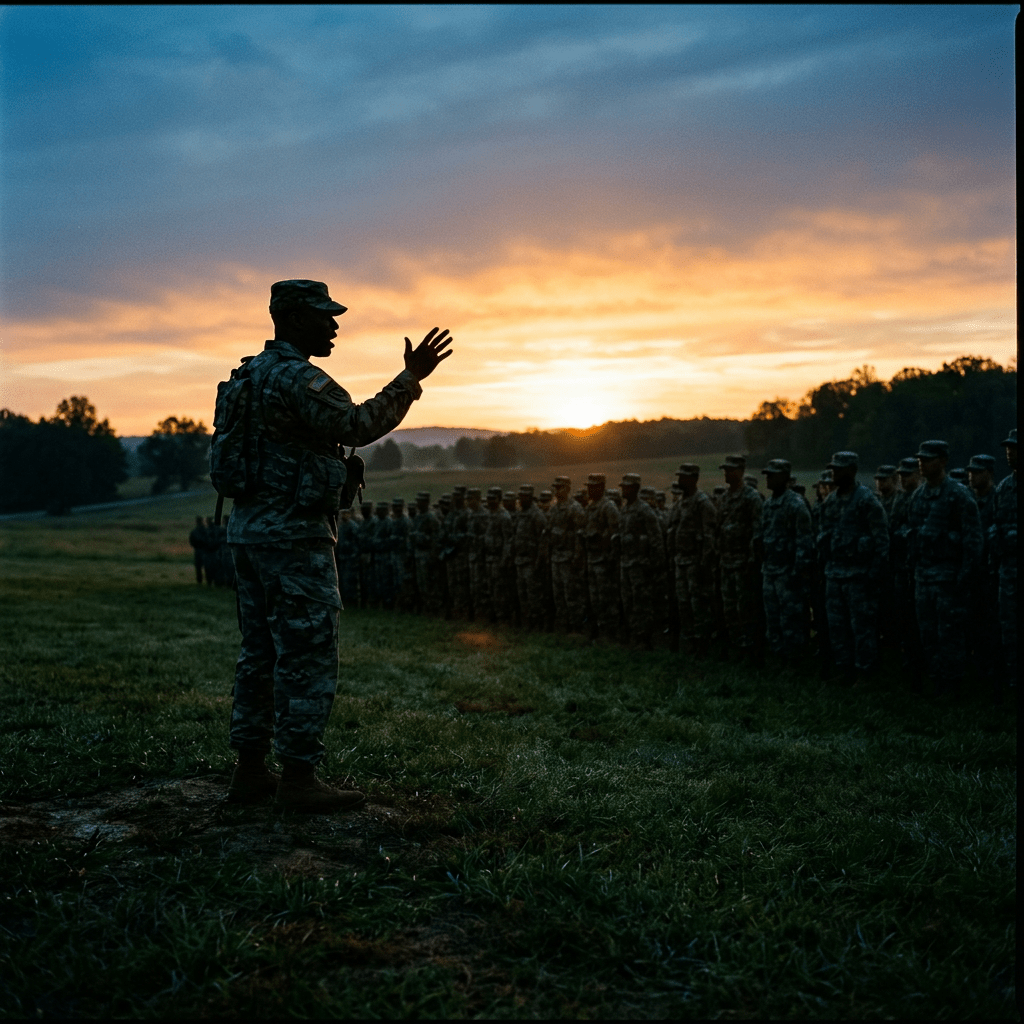
One of the most damaging myths in the enlisted force is the idea that leadership is something you “grow into” as you promote. That you become a leader at the rank of Staff Sergeant. That you become a manager at Technical Sergeant. That you become a trainer when someone hands you a CDC binder or a task cert. But that’s not how the NCO corps works. The moment you sew on that first stripe, you inherit three roles – leader, manager, and trainer – and you don’t get to pick and choose which ones you feel like doing. You are all three. Every day. In every interaction. In every task.
And the NCOs who understand this early on are the ones who build strong teams, uphold high standards, and shape their units’ culture.
The NCO as Leader: Influence, Example, and Culture
Leadership is the part everyone talks about, but too often in vague, motivational terms. In reality, NCO leadership is simple but hard: you set the tone. You model the standard. You influence the climate more than any commander ever will. Your people are watching how you carry yourself, how you speak to others, and how you handle stress, conflict, and responsibility.
Leadership isn’t a speech; it’s a pattern. And the pattern you set becomes the culture your people live in. When you show up prepared, your people learn preparation. When you stay calm under pressure, they learn to keep their composure. When you take ownership of your mistakes, they learn to take accountability of theirs. This is why the NCO corps is called the backbone. Not because of authority, but because of their example. Your presence shapes the environment long before your words ever do.
The NCO as Manager: Systems, Standards, and Execution
“Manager” gets a bad reputation because people associate it with paperwork. But management is the quiet engine of readiness. It’s the part of the job that ensures the mission doesn’t fall apart.
Management is:
- Ensuring training is current
- Tracking qualifications
- Maintaining equipment
- Coordinating schedules
- Enforcing standards
- Making sure the right people are in the right place at the right time
It’s not glamorous, but it’s essential. A leader without management is inspirational but ineffective. A manager without leadership is organized but uninspiring. The NCO role demands both. When you manage well, your team performs well. When you manage poorly, your team struggles, no matter how charismatic you are.
Management is the discipline that keeps the mission moving. It’s the structure that allows leadership to matter and training to stick.
The NCO as Trainer: Developing the Next Generation
If leadership is influence and management is execution, training is legacy. It’s the part of the job that ensures the team doesn’t just function today, it functions when you are gone.
Training is more than signing off tasks. It’s:
- Teaching why things matter
- Coaching your people through mistakes
- Giving them reps until they’re confident
- Preparing them for responsibilities they don’t have yet
- Building judgment, not just compliance
The best NCOs don’t just train for proficiency. They train for independence. They train people to think, not just follow. They train them to lead, not just complete tasks. Training is the most direct way NCOs shape the future of the force.
The Power is in the Integration
The real magic happens when NCOs stop treating these roles as separate and start seeing them as interconnected. When you lead well, your people trust your training. When you train well, your people execute your management. When you manage well, your people see the impact of your leadership. This is why the NCO corps is so effective when it’s healthy, and so dangerous when it’s not. A weak NCO doesn’t just fail in one area. They fail in all three, and the ripple effects hit the entire unit.
A Challenge to Today’s NCOs
If you’re wearing stripes, here’s the truth:
You don’t get to choose which role you want to play today. You don’t get to hide behind “I’m not a people person.” You don’t get to say, “I’m more of a manager than a leader.” You don’t get to say, “Training isn’t my thing.”
Your people need you to be all three — a leader, a manager, and a trainer.
Your stripes aren’t a reward; they’re a responsibility. And the people watching you deserve someone who embraces the full weight of that responsibility. Because when NCOs lead, manage, and train well, the mission thrives, and the people under them grow into the leaders we will depend on next.





Leave a Reply