

Submitted by Christopher Campbell
Over the past sixteen years, I have had time to reflect on what it truly means to be a Noncommissioned Officer. Serving in both the Air Force and the Space Force, I have witnessed a wide range of leadership styles—some inspiring and others that served as lessons in what not to become.
In the Space Force, we often say that Guardians are our competitive advantage. Technology matters. Architecture matters. Orbits and adversaries’ matter. Yet at the center of sustained readiness and mission success stands a constant: the Noncommissioned Officer.
The NCO corps is not static. It evolves with every generation that earns the stripes. Culture shifts, operational complexity grows, information moves faster, and expectations change. Within that change, every new NCO must decide whether they will repeat the leadership they experienced—or refine it.
What Is an NCO?
Most readers understand what an NCO is in terms of rank or position. But the reality is deeper.
In the Space Force, a Noncommissioned Officer is a Guardian entrusted with authority, accountability, and influence.
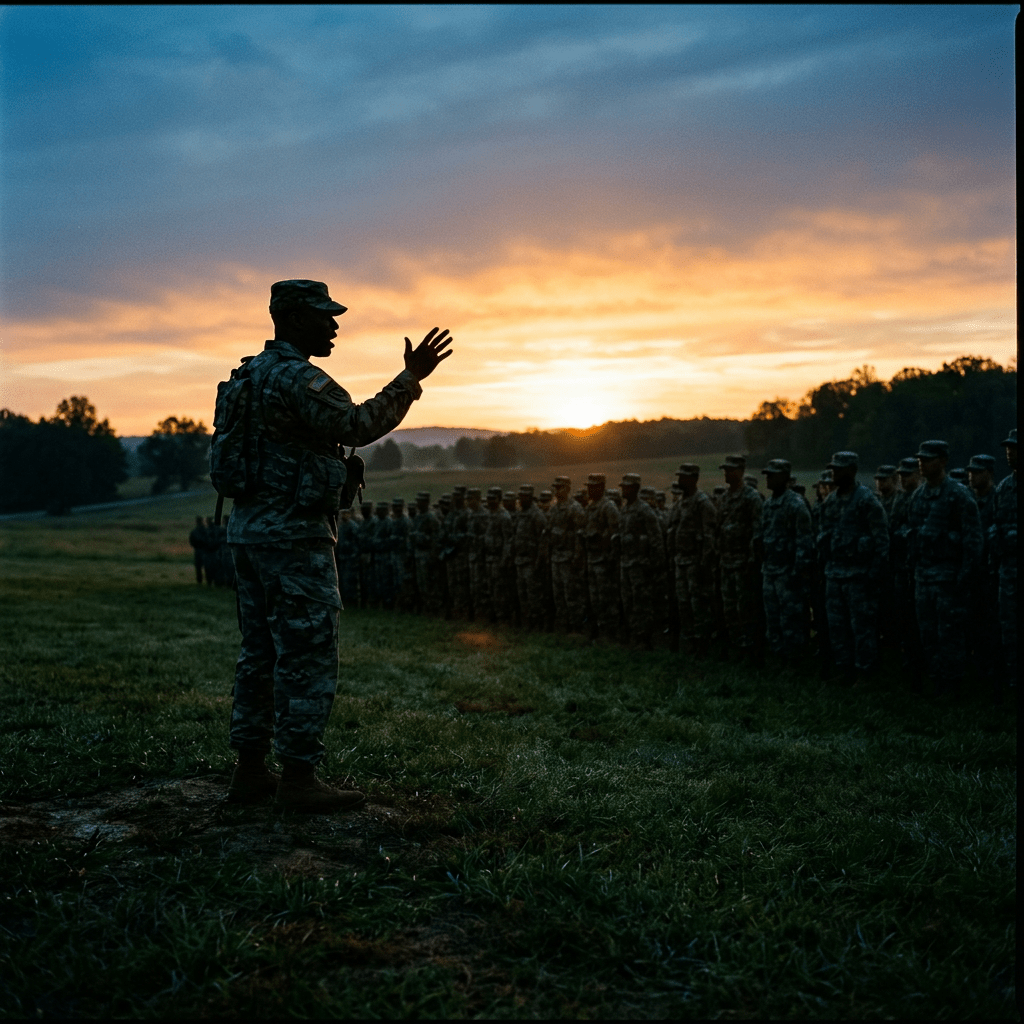
NCOs enforce standards and discipline. They translate commanders’ intent into tactical execution. They train and develop junior Guardians while sustaining readiness in contested and dynamic environments.
Equally important, NCOs shape the climate within their units. They serve as mentors, stabilizers, and culture-setters during uncertainty and change. Unit success only occurs when NCOs act together, share a vision, and work toward a common goal.
NCOs connect the strategic to the practical—linking commanders’ intent to daily execution, officers to specialists, and doctrine to behavior.
The stripes do not simply grant authority.
They represent trust.
And the NCO corps is only as strong as its weakest link.
How Junior Guardians See NCOs
As a junior Airman, NCOs seemed larger than life. Their presence alone could change the atmosphere of a room. They controlled discipline, recognition, opportunities, and sometimes even morale.
At that stage in my career, it was difficult to distinguish between fear and respect. Authority appeared absolute. Decisions seemed final. Confidence appeared effortless.
Some NCOs left lasting impressions. There was the technical expert who could solve complex problems without drama. The steady leader who corrected in private and praised in public. The volatile supervisor who relied on volume instead of clarity. And the disengaged leader who avoided difficult conversations.
Those early experiences became reference points—some models to emulate, others to avoid.
Whether we realize it or not, junior Guardians are constantly studying their NCOs. Long before they ever wear the stripes themselves, they are forming their definitions of leadership.
Becoming an NCO: The Shift in Responsibility
The moment you pin on NCO rank, something changes.
Critique becomes responsibility. Observation becomes ownership.
The question is no longer, “Why isn’t leadership fixing this?”
It becomes, “Why haven’t I?”
Some new NCOs struggle with this transition because their mindset remains in Specialist mode—focused primarily on technical proficiency. But the moment the stripe is sewn on, expectations expand. NCOs must now be both subject matter experts and leaders responsible for developing others.
Many new NCOs ask themselves the same question:
What kind of NCO will I be?
Some attempt to replicate leaders they admired. Others overcorrect from negative experiences. Eventually, most discover that leadership is not imitation—it is alignment. Alignment between standards, values, personality, and mission.
NCO leadership rarely exists in black-and-white situations. Instead, it operates in gray areas where incomplete information and competing priorities are common. In those moments, leaders must make the best decision possible for their people and their mission.
Sometimes making a decision is better than making none at all.
Today’s generation of service members also expects something previous generations did not always demand: the “why.”
Leadership can no longer rely solely on positional authority. Guardians expect clarity of purpose, transparency of intent, and consistency in standards. They respond best to leaders who explain not just what needs to be done—but why it matters.
This forces every NCO to answer a fundamental question:
Do I want to manage, or do I want to lead?
Strong vs. Weak NCOs
The difference between strong and weak NCOs rarely comes down to intelligence or technical expertise.
It comes down to consistency, courage, and character.
Strong NCOs enforce standards equally. Favoritism spreads quickly and destroys morale. They communicate clearly both up and down the chain—translating commanders’ intent while advocating for their people.
They address problems directly rather than avoiding them. Difficult conversations are uncomfortable, but they are necessary to prevent toxic environments.
Strong NCOs also develop their subordinates deliberately. They challenge their troops and refuse to allow complacency to take root. They demonstrate emotional intelligence and the humility to admit mistakes.
Most importantly, they protect their troops without excusing poor performance.
Strong NCOs understand that leadership is not about control—it is about clarity. They create stability in uncertain environments. They guide rather than belittle.
Weak NCOs, by contrast, apply standards unevenly. They avoid conflict because they fear being disliked. They undermine leaders in front of subordinates, eroding trust and professionalism.
Many focus more on personal recognition and promotion than on developing others.
Weak leadership erodes trust faster than any external threat. In a domain where precision and coordination are critical, inconsistency becomes operational risk.
The Joint NCO
Just as our systems must communicate across domains, our NCOs must be capable of leading across services.
We cannot wait until a joint assignment to understand how Soldiers, Sailors, Marines, or our allies operate. The time to refine that understanding is now—before the first shot is fired or the first satellite is jammed.
Every NCO should study the strengths of other services:
The Marine’s bias for action.
The Soldier’s grit.
The Sailor’s technical discipline.
Learn from them. Adapt their strengths. Integrate them into your leadership style.
And most importantly, weaponize the “why.”
In contested environments where communication may fail, the “why” becomes the bridge between intent and initiative. When subordinates understand the purpose of a mission, they can act decisively even without direct guidance.
The so-called “Why Generation” is often criticized for asking more questions. In reality, their curiosity forces leaders to be clearer, more transparent, and more deliberate.
Providing the “why” does more than answer a question.
It empowers others to lead.
Breaking the Cycle
There is an uncomfortable truth about leadership development: we often learn more from bad NCOs than from good ones.
Eventually every junior Guardian becomes an NCO—or works closely with one. At that moment, a choice appears.
Repeat the leadership you experienced.
Or refine it.
Self-awareness is the turning point. Reflection transforms frustration into growth.
Instead of saying, “That’s just how it was,” the effective NCO asks:
“How can I make it better?”
The evolution of the NCO corps is built not on policy but on thousands of individual leaders choosing improvement over repetition.
The Future of the Guardian NCO
The future NCO in the Space Force must combine technical mastery with human leadership.
As operations grow more complex and increasingly integrated across domains, the demand for disciplined NCO leadership will only grow.
But the ultimate measure of an NCO is not technical competence alone.
It is the ability to develop leaders who surpass them.
The strength of the NCO corps is not measured by how tightly it holds authority—but by how effectively it multiplies capability.
Conclusion: The Stripes You Leave Behind
The mission remains constant: secure our nation’s interests in, from, and to space.
The environment evolves.
Technology evolves.
The force evolves.
The NCO corps must evolve with it.
Every Guardian who earns the stripes stands at a crossroads. You are either reinforcing old habits or refining them. You are either continuing a cycle—or elevating it.
In the end, the true test of an NCO is not authority.
It is influence.
Not control.
But trust.
So, the question remains:
What kind of NCO are you building?
All thoughts and ideas are original to MSgt Christopher Campbell.




Leave a comment